Start Here
Build a Healthy Habitat
A great enclosure supports natural behavior, steady routines, and a confident gecko. Start with the essentials, then adjust based on your species and its needs.
Right-sized enclosure
Secure climbing & hiding spaces
Fresh water daily
Species-appropriate temperatures & humidity.
New Caledonia Gecko Care
One of the best reptiles in our opinion to have as a pet are the geckos that are from New Caledonia. This includes the crested, gargoyle, chahoua and leachianus geckos as well as others! Crested geckos were thought extinct until discovered alive and well on the Isle of Pines in 1994! The Isle of Pines is part of New Caledonia which is comprised of several small islands located near Australia.
The geckos in this family are easy to care for, generally requiring no extra heat. Day temperatures for these geckos should range from 72 to 80 degrees on average and night temps should not fall below 65 degrees. Humidity levels should range between 60 and 80%. Misting one time every other day or each day will depend on your home and humidity levels, they may require misting twice a day to achieve these levels. You will want to monitor your specific conditions using a temp and humidty gauge. UVB is not required for these geckos but many breeders are having a good response using UVB even finding their geckos basking.
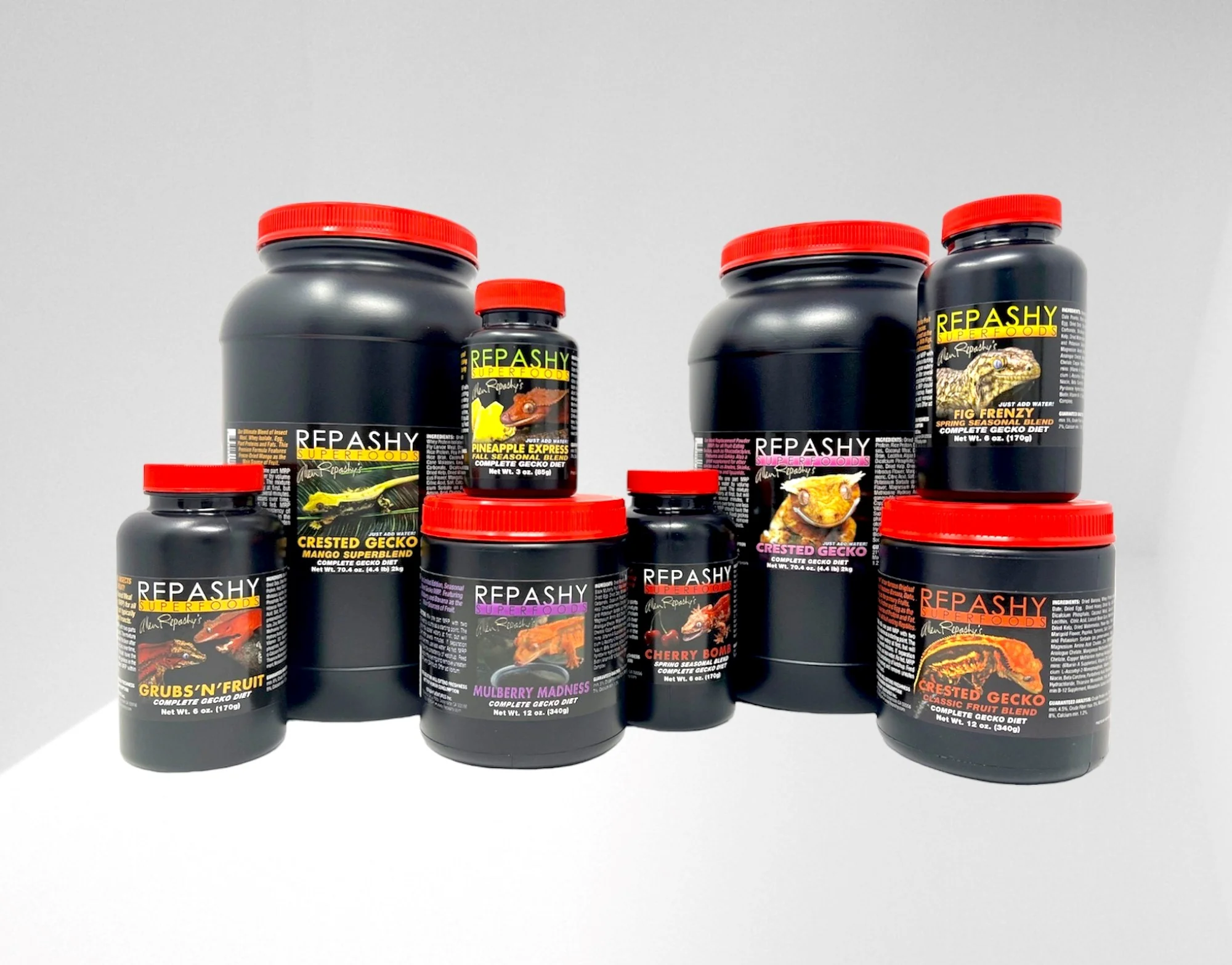
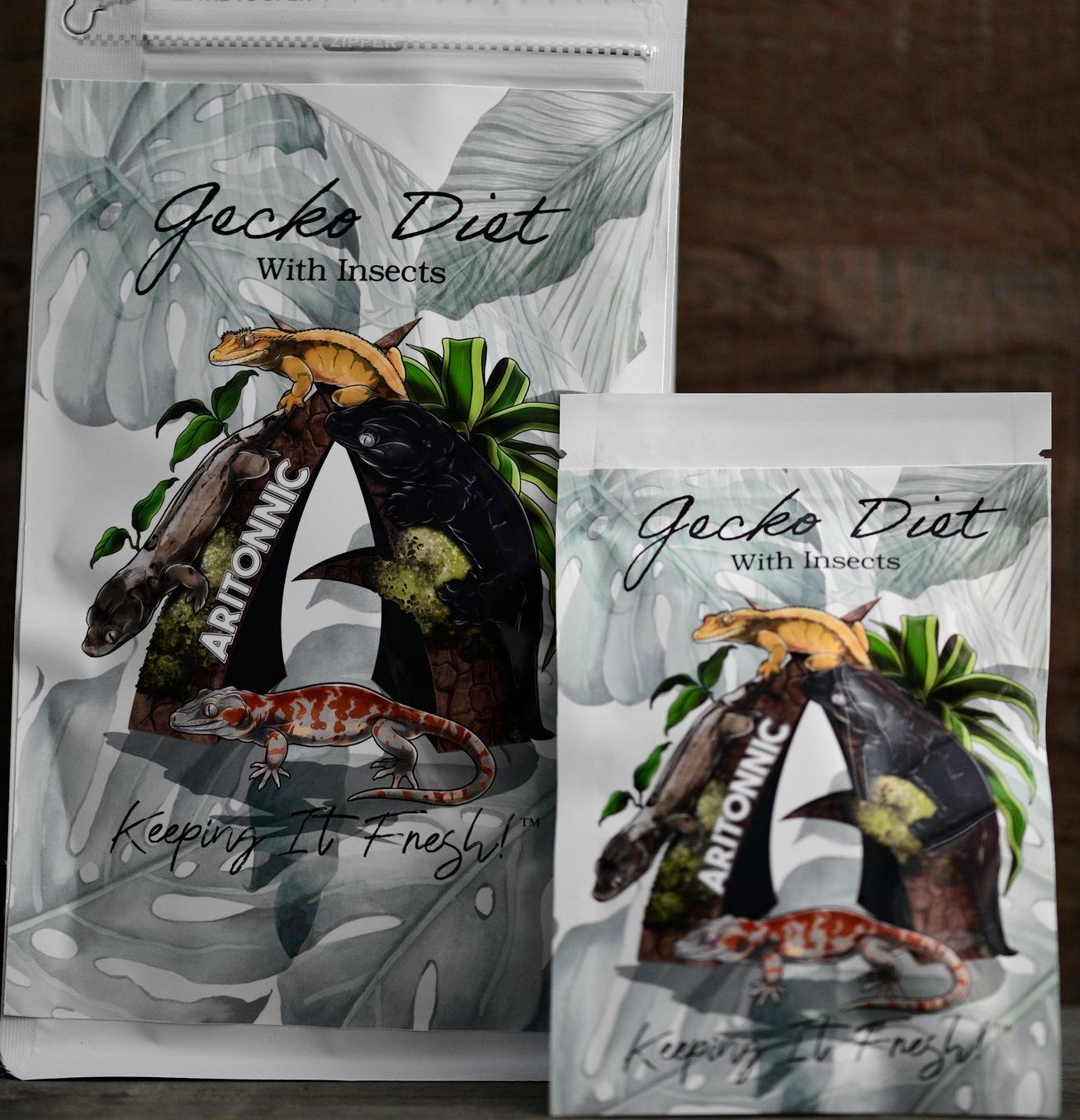
These geckos are fed a commercially prepared diet and should be supplemented with appropriately sized crickets or roach nymphs. Phoenix worms are a good supplement as they are high in calcium . You should not be feeding your geckos baby food, not even as a treat! You will want to be feeding your geckos a commercially prepared diet along side your chosen insect that you will have dusted with calcium that contains D3.
These geckos can be housed in a variety of enclosures, they are arboreal so they require more height in their enclosure than width or depth. Leachianus geckos prefer cork rounds or cork tubes in their enclosures. Chahoua geckos have been found closer to water and seem to do better in a more moist environment. The chahoua also does best when fed a prepared diet along with a good variety of insects. You can place a 20 gallon aquarium on its end, after installing a secure screen type door and house a crested. Caging recommendations have changed as time has gone on. At one time a 12x12x18 was ok for an adult crested. They do suggest larger enclosures now. Leachianus do require larger cages as adults. There are also special cages made for reptiles, such as Exo-Terra or ZooMed. You should purchase the largest size enclosure possible based on the size gecko you own. Gecko Haven houses them in planted bio-active enclosures as adults. You can possibly keep two female crested geckos together if the size of your enclosure is large enough and the geckos are the same size. Once again, you must have the proper sized cage. Male geckos need to be kept separately from each other as they will fight. You may even find that female geckos of the same size will fight. You must keep a close eye on them to make sure you do not find any injuries that show one is being bullied and that each animal is receiving the proper amount of food. We do not recommend keeping animals together unless you are an experienced keeper!
Some of the items you can use in your caging can be paper towel tubes, toilet paper tubes, pipe insulators, suction cup soap dishes used as ledges. You can be very creative and make a planted vivarium or have it simple. Totally up to you as long as the required care is given.
Baby reptiles always seem to do better in a smaller enclosure. Some keepers do place young geckos into larger enclosures but we found that they will live in that but not thrive. You can move up in cage size as the baby gets older and larger. Make sure you have a lot of things to climb on and hide in. You should not be able to easily find your gecko in it’s enclosure! Please contact us if you have further questions on housing or food.
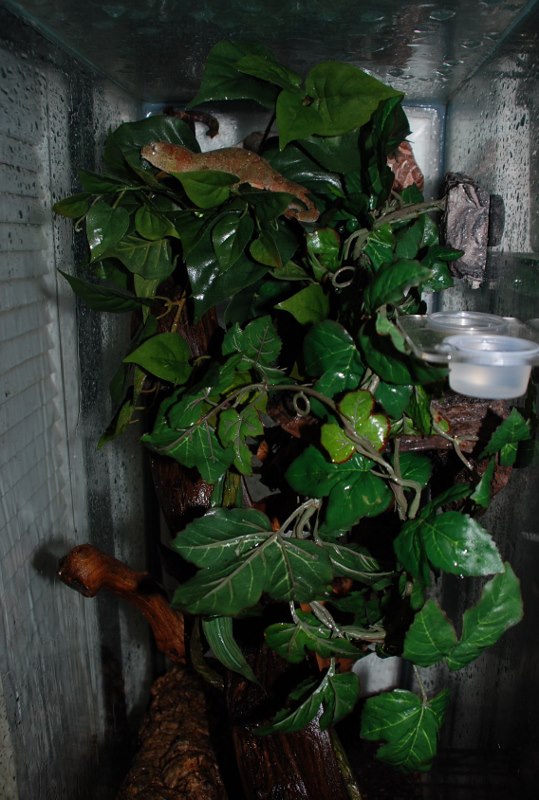
This enclosure was just misted

This is a pipe insulator you can use as “branches”


Watch these informative videos below
Thanks to Exo Terra for this awesome video of New Caledonia! Watch the video
Thanks to Brian at Altitude Exotics here is a video to assist with a picky eater! Watch the video
Here is a video produced by Pangea that teaches you how to handle your gecko! Watch the video
Here is a great video on sexing your crested gecko by Swift Arrow Geckos! Watch the video
As always, we are here to help you in any way we can. If you have questions or concerns, please do not hesitate to contact us!
Habitat
Safe Plants
Live plants can create a natural, enriching enclosure for New Caledonian geckos when chosen carefully.
Bromeliads:
*Aechmea fasciata (Urn plants/Silver Vase Bromeliad) � Large
*Billbergia nutans � (queens Tears) partial shade to bright indirect light
*Cryptanthus zonatus (Earth stars) � warm, humid, bright light
*Guzmania lingulata � warm, humid, bright light
*Nidularium � 12-15 inches, low to Med. Light
*Tillandsia � Air plant, warm & humid
*Vrisea splendens (sword bromeliads) Light shade
~Other Plants:
*Acalphya (copperleafs, chenille plants)
*Adiantum (maidenhair ferns) � cool and dry in winter
*Aglaonema (Chinese evergreens) � do well in low lights, highly recommended
*Alocasia (elephant ears) � must be kept moist, humid and warm, will either not do well or overgrow everything
*Asplenium (Bird�s nest fern) � moist soil, up to 3 feet high
*Bamboo – (live or dry) please the the Wikipedia article, way to much intresting info to list! Clippings will produice.
*Beaucarnea recurvata – (Ponytail Palms)
*Calathea zebrine – (Zebra plant) � moist moderate temps, moderate light
*Ceropegia woodii – (Rosary Vine,Hearts entangled, or String of hearts) Water thoroughly, and then allow the soil to completely dry out before watering again.
*Chlorophytum (spider plants) � average humidity, moderate light, should be allowed to get almost dry before watering
*Cissus (kangaroo vines, grape ivys) � no moist soil
*Codiaeum variegatum (often confused for Croton, because of this it is often labeled “croton” as a common name)
*Crassula ovata – (Jade Plant, Friendship tree or Money plant)Clippings will produice.
*Cyrtomium – (Holly ferns)
*Dracaena – (Dragon plants)
*Ficus (rubber trees, ornamental figs) should be washed of when dirty, do wellin spotlight, Use caution with any plant of the ficus family that has a “milky sap” when leafs/stems are broken, it is a skin and eye irratant.
*Maranta – (prayer plant) warm temps, high humidity
*Peperomia – (radiator plant) some in this family are an epiphyte or air plant. Clippings will generally produice.
*Radermachera sinica – (China Doll)very difficult to root, Growth slowers used by nurserys will grow fast and less bushy.
*Sanseveria – (Snake Plants)aethiopica,caniculata,kirkii pulchra, parva, pinguicula, sinularis, thyrsiflora & trifasciata
*Scindapsus (Pothos) – looks like philodendron, very hardy. Clippings will produice.
*Schefflera arboricola – (Umbrella Plant)
*Spathiphyllum – (peace lilies) all lilys are toxic to cats *uses caution in tanks.
*Tradescantia zebrina – (wandering Jew/ spiderwart) Can cause skin iritation in humans when handeld frequently. Clippings will produice. Called inch plant because it can grow up to an inch a day!
*Pillow Moss- Moss is notoriously hard to keep alive and spread and requires a lot of light and water (probably too much than a Rhac would receive in the wild).
*****WARNING*****
These plants have been claimed by some to be harmful in tanks with live animals. Some have been use with little to no problems, others are dangerous. Please use with cation or not at all.
*Hedera helix – (Ivy, English Ivy) This plant is nontoxic to birds but is toxic to humans. It is unknown what would happen when and if a feeder insect were to eat it then a reptile were to eat it in exchange. I think it is best to avoid.
*Philodendron- All parts of the plant are poisonous, due to the presence of calcium oxalate crystals. Make sure to double check this vs. Pothos, they look alike and are generally mix together at most plant stores. Some say that this plant is safe but from my reading I do not agree they are for all herps.
*Dieffenbachia – (Dumbcane) All parts of the plant are poisonous, due to the presence of calcium oxalate crystals. . It has been known to cause the death of cats, dogs, and small children. This plant is considered a neurotoxin.
http://www.livingrainforest.org/abou…the-dumb-cane/
*Codiaeum variegatum and Croton look the same accept Croton (genus) Croton Oil is used as an active ingredient in facial chemical peels. Also in the past Croton oil was used in herbal medicine as a violent purgative. Some have claimed is has killed there pets.
*Dracunculus vulgaris (aka Arum dracunculus) aslo Voodoo Lily. Roots and other parts of the plant are listed as toxic.
Even if a plant is listed as ‘toxic if eaten’ don’t believe for a moment your animal won’t lick the plant or eat an insect that’s eaten the plant. Be very careful with them.
These Are the Diets We Recommend